Cookware
The three types of pans that a cook can't do without
Galley kitchens are small and honest. These are the three pans that earn their place first, at sea or at home.
22 June 2026
A note on links.Some links on this page are affiliate links. If you buy through them we may earn a small commission at no extra cost to you. We only recommend cookware we use in our own kitchens.
A superyacht galley teaches you what cookware is actually for. Space is scarce, the sea moves and dinner still has to leave the pass on time. A working galley carries more than three pans to do that, but three types do most of the cooking and those are the ones I would keep in any kitchen.
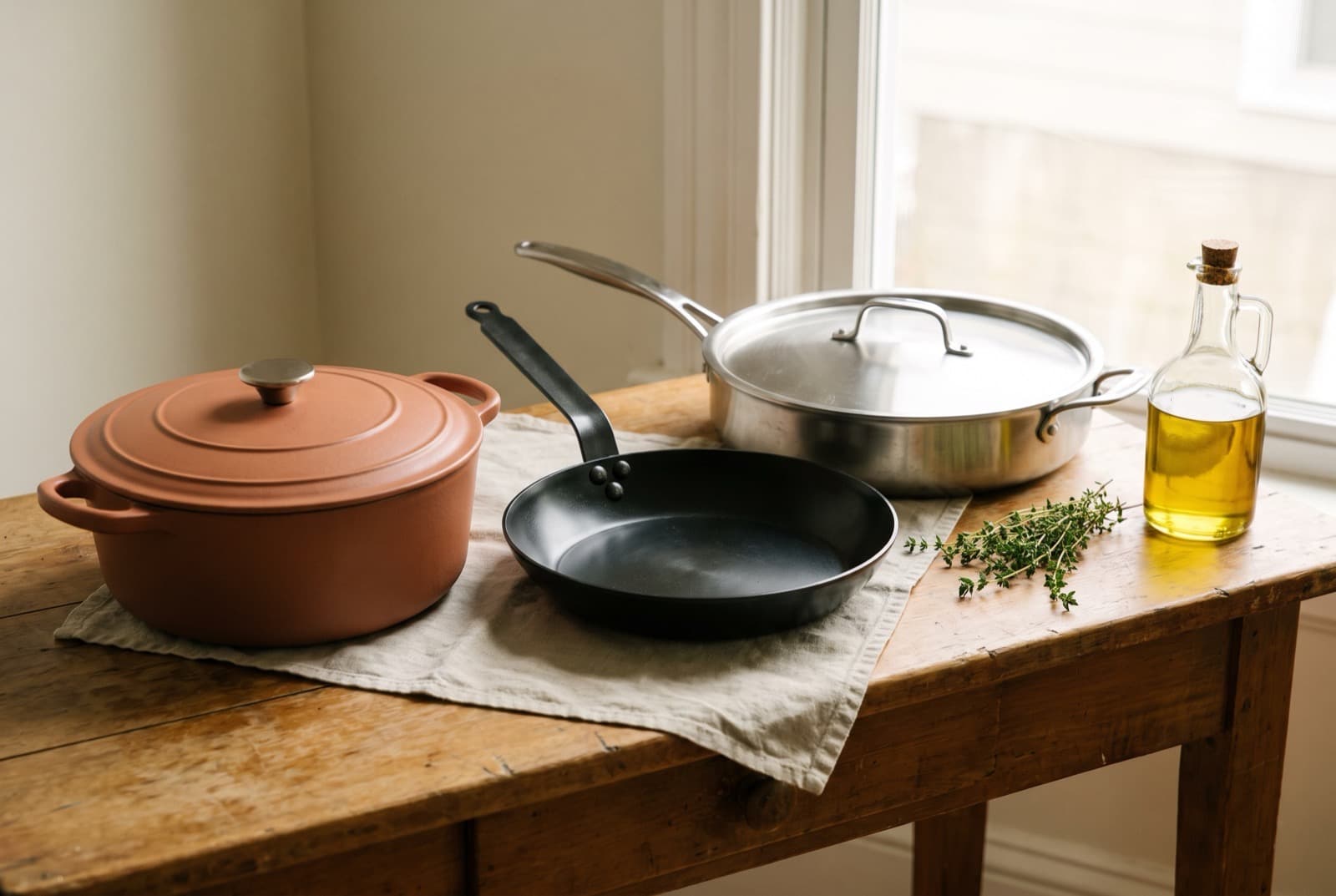
The first keeper is a heavy enamelled cast iron pot, 26 to 28 centimetres. It braises, it bakes bread, it deep fries on a calm day and it goes from oven to table looking the part. Buy it once, buy it heavy and expect to hand it on to someone you love.
The second is a carbon steel frying pan. Lighter than cast iron, faster to heat and better than nonstick at everything except a delicate omelette. It wants drying and a wipe of oil after washing, which sounds like fuss and takes eleven seconds.
The third is a wide stainless sauté pan with a lid. It is the pan for risotto, for shallow braises, for wilting a mountain of greens and for every sauce you will ever reduce. If the handle is comfortable and the base is thick, the brand matters far less than the habit of using it.
Small kitchens are not a compromise. They are an editor. You may be pleasantly surprised that the equipment you need to produce delicious and elegant food is more simple than you think.
Cook along with us
One good email a week. Teaching like this, plus a recipe worth cooking.
Receive your free bundle and a recipe and note from Jo each week. Unsubscribe any time.